
Affiliated Patient Service

Repetitive Transcranial Magnetic Stimulation (rTMS)
For people with unipolar treatment-resistant depression (TRD)
Community Program

Team-based approach to well-being
Depression and anxiety-related disorders are common. While many people improve with medication or psychotherapy, some do not. Access to Repetitive Transcranial Magnetic Stimulation (rTMS) is now available for adults across Ontario with treatment-resistant depression, free of cost.
To learn more about Ontario's new publicly funded Repetitive Transcranial Magnetic Stimulation (rTMS) program, visit: Depression and Anxiety-Related Concerns - Neurostimulation Procedures Provincial Program | Ontario Health
CarePoint Health is proud to partner with William Osler Health System for the delivery of rTMS.
Referrals must be made by a physician. If you are a patient who is interested in rTMS, talk to your doctor about a referral.
- Complete ‘Presenting Problem/Provisional Diagnosis’ section and note that rTMS is being recommended
- Select ‘Psychiatry Consult’ under ‘Adult Services’
- Fax to William Osler Health System Outpatient Mental Health at 905-494-6757
What is rTMS and how does it work?
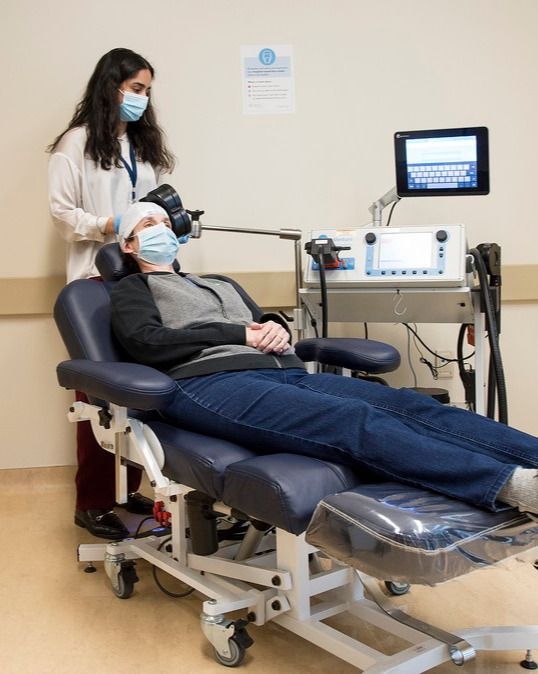
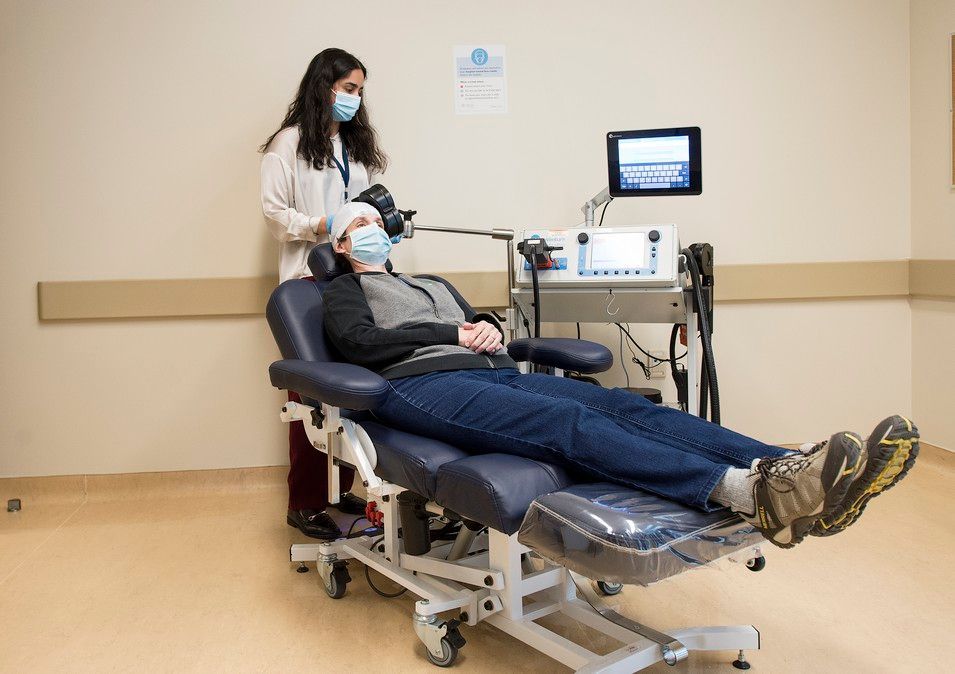
rTMS is a safe, non-invasive treatment that uses a magnetic field to stimulate nerve cells in the brain that are involved in controlling emotions. With repeated treatments, the magnetic pulses impact how the brain works, to ease depression symptoms and improve mood, with little or no discomfort.
Rapidly changing magnetic pulses cause neurons to change their firing pattern within the brain. By changing the firing pattern of neurons in brain circuits involved in a disorder such as depression, the dysfunctional brain patterns can change. The brain activity changes are thought to be a mechanism through which treatment occurs.
The patient remains awake during the procedure and can return to normal daily activities immediately following (no medication or anesthesia is required). The patient will be sitting comfortably in a recliner throughout the session.
Who is rTMS for?
Eligibility
Adults aged 18+ experiencing unipolar treatment-resistant depression (TRD)
Consideration should be given to the level of treatment resistance and probability of achieving remission. TRD is defined as a unipolar depressive episode that is unresponsive to at least one adequately dosed evidence-based medication trial or psychotherapy in the current episode.
Exclusions
Clinical judgement must be used to determine suitability for rTMS treatment. Evidence suggests rTMS is unsuitable for individuals with the following:
- Severe depressive disorder with features of psychosis
- Current seizure disorder
- Ferromagnetic or metal hardware implanted in the head and/or neck (e.g., cochlear implants, aneurysm clips, plates)
- Implanted cardiac defibrillators and pacemakers; may be suitable at some centres (e.g. centres with appropriate cardiac resources) based on clinician judgment
rTMS is generally not recommended for inpatients given the established efficacy of ECT for in-patients with severe depression.
How do I refer my patient for rTMS?
- Complete ‘Presenting Problem/Provisional Diagnosis’ section and note that rTMS is being recommended
- Select ‘Psychiatry Consult’ under ‘Adult Services’
- Fax to William Osler Health System Outpatient Mental Health at 905-494-6757
After referral:
- Patient will receive a phone call from William Osler to book the nursing intake assessment. Patients can also request translation services if needed.
- The nursing intake assessment is conducted with the patient to review initial eligibility criteria.
- An rTMS physician then conducts a comprehensive assessment to determine whether the patient is appropriate for treatment.
- Treatment sessions are conducted daily at William Osler Health System - Brampton Civic Hospital.
If a referral is declined at any stage of the process, the referring provider is notified.


